Calculadora Gratuita de Tierra

Nivela sin adivinar.

Ingresa las dimensiones de tu proyecto en la Calculadora de Tierra y descubre al instante cuántas yardas cúbicas necesitas y cuánto pesan en toneladas.

Calcula tu Proyecto

Diagrama del Proyecto

L: 10 ftW: 5 ft3 in

Volumen Total

—Yardas Cúbicas

Ingresa las dimensiones arriba

Peso Estimado

—Toneladas

Basado en densidad de Tierra (1.15 t/yd³)

Dirt Coverage per Cubic Yard (by Depth)

1 inch deep324 sq ft
2 inches deep162 sq ft
3 inches deep108 sq ft
4 inches deep81 sq ft
6 inches deep54 sq ft
12 inches deep27 sq ft
Tierra para paisajismo y construcción

Tierra Guía de Referencia

Tierra para paisajismo y construcción

Referencia de Densidad y Peso de Tierra

Sistema de MediciónVolumen TotalPeso Estimado
Imperial (EE. UU.)1 Yardas Cúbicas1.15 Toneladas (2,300 lbs)
Métrico (UE)1 m³1.50 Tonnes (1,504 kg)

* Nota: El peso exacto puede variar según el contenido de humedad y la compactación.

Dirt Costs in 2026 (Estimates)

Raw fill dirt (per cubic yard)$8 – $15
Screened dirt (per cubic yard)$18 – $35
Screened dirt, 10 cubic yards$180 – $350
Raw dirt, full truck load (10 cu yd)$80 – $150
Delivery fee (per load, typical)$50 – $150
Self-haul by pickup (about 0.5 cu yd per trip)No delivery fee

Prices are 2026 US averages. Actual costs vary by region and supplier.

Profundidades Recomendadas para Tierra

Proyecto / UsoProfundidad Recomendada
Nivelación de Césped1–2 pulgadas
Pendiente Alejada de los Cimientos4–6 pulgadas
Base para Camas de Jardín6–8 pulgadas
Relleno de Hoyos y Huecos12+ pulgadas (en capas compactadas)
Relleno Contra los Cimientos12–24 pulgadas

Cómo Calcular el Volumen de Tierra

La mayoría de los proveedores venden tierra por yarda cúbica. Para convertir el área a yardas cúbicas, usa esta fórmula:

Volume (cu yd) = (Length × Width × Depth) ÷ 27

Nuestra calculadora también multiplica el resultado por 1.15 toneladas/yd³ (la densidad estándar de tierra) para mostrar el peso estimado.

Dirt Calculator: Types, Compaction & the Divide-by-27 Formula

What "Dirt" Actually Means

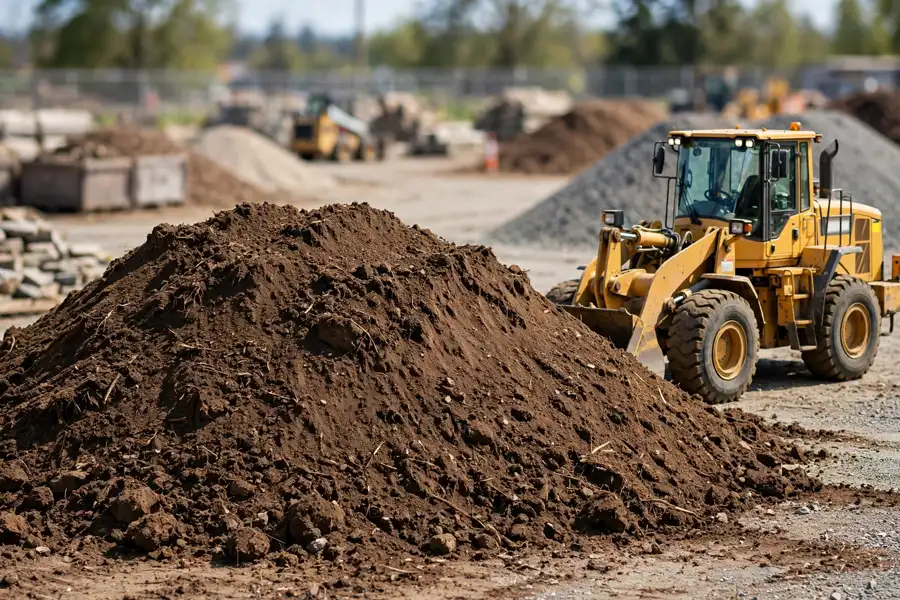
Dirt is excavated earth: a natural mix of clay, sand, silt, and small rock dug from below the surface. Unlike topsoil, it contains very little organic matter, which is exactly why builders like it. It does not decompose, shrink, or shift the way rich garden soil does, so it holds grade for years under lawns, patios, and foundations. The trade-off is that almost nothing grows well in it. Plan to use dirt for structure and volume, then cap any planting surface with 4 to 6 inches of topsoil.

The Formula: Why You Divide by 27

Every dirt calculation follows the same three steps. First, multiply length by width by depth, all in feet, to get cubic feet. Second, divide by 27, because one cubic yard is a cube 3 feet on each side, and 3 × 3 × 3 = 27 cubic feet. Third, add your compaction allowance. Worked example: a 20 by 10 foot area at 6 inches (0.5 feet) deep is 20 × 10 × 0.5 = 100 cubic feet, and 100 ÷ 27 = 3.7 cubic yards. Add 15 percent for compaction and you order about 4.25 cubic yards. The dirt calculator above runs exactly this math, including the weight conversion at 1.15 tons per cubic yard.

Loose, Bank, and Compacted Volume

The same dirt takes up a different amount of space depending on its state. Dirt sitting undisturbed in the ground is called bank volume. Once dug, it fluffs up with air pockets and grows by roughly 20 to 25 percent: that is loose volume, the state it is in when the truck dumps it. Spread, wetted, and rolled, it settles back down and loses 10 to 20 percent of its loose volume in the process. This is why a hole that measures exactly 10 cubic yards can swallow 12 yards of delivered dirt. The calculator result is finished, in-place volume, so always add the compaction percentage before ordering.

Choosing Between Raw, Screened, and Topsoil

Raw dirt at $8 to $15 per cubic yard is the cheapest way to add bulk: raising grade, filling old pool holes, and building up low spots. It may contain rocks and clods, which is fine below the surface. Screened dirt at $18 to $35 per yard has been passed through a mesh that removes debris larger than about half an inch, so it spreads smoothly and is the right choice for the finish layer of a grading job. Neither type grows plants well. Wherever grass or garden beds will sit on top of your dirt work, finish with 4 to 6 inches of screened topsoil and calculate that layer separately with the topsoil calculator.

Consejos de Expertos

1

La tierra se compacta entre un 10 y un 20% después de colocarla y rodillarla. Pide siempre ese porcentaje extra para no quedarte corto.

2

Una yarda cúbica de tierra seca pesa entre 2,000 y 2,300 lbs (unas 1.15 toneladas). Mojada, puede llegar a 2,700 lbs por yarda.

3

Un camión de volteo estándar transporta de 10 a 14 yardas cúbicas por viaje, así que la mayoría de los proyectos residenciales se resuelven con una sola entrega.

Preguntas Frecuentes

¿Cuánta tierra necesito para mi proyecto?▼
Multiplica el largo por el ancho por la profundidad en pies y divide entre 27 para obtener yardas cúbicas. Una zona de 10×10 pies a 6 pulgadas de profundidad necesita 1.85 yardas cúbicas, y unas 2.2 yardas si cuentas la compactación.
¿Cuánto pesa una yarda cúbica de tierra?▼
Seca, una yarda cúbica pesa entre 2,000 y 2,300 lbs, unas 1.15 toneladas. Después de la lluvia puede pesar hasta 2,700 lbs por yarda.
¿Cuántas yardas hay en una tonelada de tierra?▼
Una tonelada de tierra seca equivale a unas 0.85 a 0.9 yardas cúbicas. La Calculadora de Tierra convierte automáticamente entre yardas y toneladas.

Calculadoras Relacionadas

Guías Relacionadas