Calculadora Gratuita de Tierra de Relleno

Nivela tu terreno al instante.

Averigua exactamente cuánta tierra de relleno necesitas.

Calcula tu Proyecto

Diagrama del Proyecto

L: 10 ftW: 5 ft3 in

Volumen Total

—Yardas Cúbicas

Ingresa las dimensiones arriba

Peso Estimado

—Toneladas

Basado en densidad de Tierra de Relleno (1.25 t/yd³)

Fill Dirt Coverage per Cubic Yard (by Depth)

1 cubic yard at 2 inches deep162 sq ft
1 cubic yard at 4 inches deep81 sq ft
1 cubic yard at 6 inches deep54 sq ft
1 cubic yard at 12 inches deep27 sq ft
10×10 ft area at 6 inches deep1.85 cu yd (order 2.2 with compaction)
20×20 ft area at 6 inches deep7.4 cu yd (order 9 with compaction)
Tierra de Relleno para paisajismo y construcción

Tierra de Relleno Guía de Referencia

Tierra de Relleno para paisajismo y construcción

Referencia de Densidad y Peso de Tierra de Relleno

Sistema de MediciónVolumen TotalPeso Estimado
Imperial (EE. UU.)1 Yardas Cúbicas1.25 Toneladas (2,500 lbs)
Métrico (UE)1 m³1.63 Tonnes (1,635 kg)

* Nota: El peso exacto puede variar según el contenido de humedad y la compactación.

Fill Dirt Costs in 2026 (Estimates)

Fill dirt, picked up (per cubic yard)$8 – $20
Fill dirt, delivered (per cubic yard)$15 – $40
Full truck load, 10 cu yd picked up$80 – $200
Full truck load, 10 cu yd delivered$150 – $400
Per ton, delivered (about 0.8 cu yd)$12 – $32

Prices are 2026 US averages. Actual costs vary by region and supplier.

Profundidades Recomendadas para Tierra de Relleno

Proyecto / UsoProfundidad Recomendada
Nivelación generalVaría según el hoyo

Cómo Calcular el Volumen de Tierra de Relleno

La mayoría de los proveedores venden tierra de relleno por yarda cúbica. Para convertir el área a yardas cúbicas, usa esta fórmula:

Volume (cu yd) = (Length × Width × Depth) ÷ 27

Nuestra calculadora también multiplica el resultado por 1.25 toneladas/yd³ (la densidad estándar de tierra de relleno) para mostrar el peso estimado.

Fill Dirt Calculator: Weight, Compaction & Ordering Guide

What Fill Dirt Is and Where It Is Used

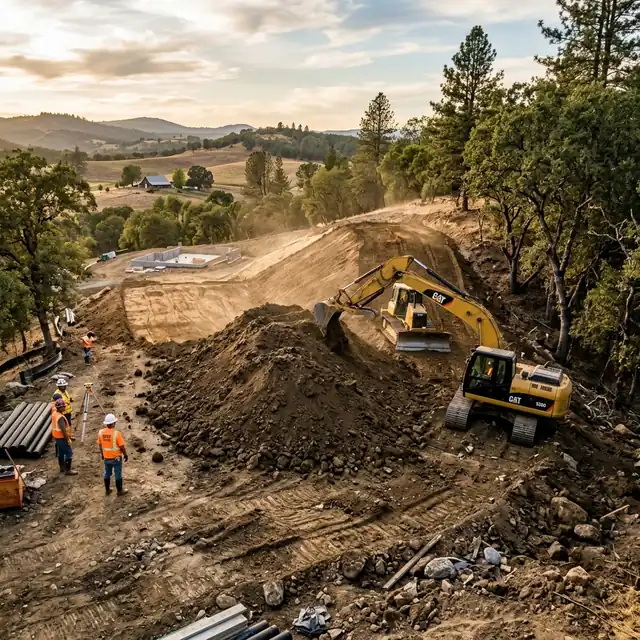
Fill dirt is subsoil excavated from below the topsoil layer, usually 12 or more inches down. Because it contains almost no organic matter, it does not decompose or shift after placement, which makes it the structural material of choice for raising grade, backfilling foundations, filling old swimming pool holes, and building up low spots before paving. A cubic yard of it weighs 2,200 to 2,500 lbs dry, so it stays where you put it. What it cannot do is grow anything: plan a 4 to 6 inch topsoil cap wherever grass or plants will live.

Compaction: Why You Order 20% Extra

Loose fill dirt is full of air pockets. Once it is spread, wetted, and tamped or rolled, those pockets collapse and the volume drops by about 20%. Contractors manage this by placing fill in lifts, layers of 4 to 6 inches that are each compacted before the next one goes down, which prevents the sinking and cracking that plague single deep dumps. The practical consequence for ordering is simple: take the finished volume from the fill dirt calculator and multiply by 1.2. A 10 cubic yard hole needs about 12 yards delivered, every time.

Weight, Trucks, and 2026 Prices

At 1.25 tons per cubic yard, fill dirt is heavy enough that logistics drive the real cost. A standard dump truck carries 10 to 14 cubic yards per load, roughly 12.5 to 17.5 tons, while a half-ton pickup manages only about half a yard per trip. In 2026, expect $8 to $20 per cubic yard picked up and $15 to $40 delivered depending on distance. Ask for clean fill, confirm the load is free of debris and contaminated soil, and get the delivery fee in writing before the truck leaves the yard.

Consejos de Expertos

1

La tierra de relleno no tiene nutrientes, no plantes directamente en ella.

Preguntas Frecuentes

¿Qué es la tierra de relleno limpia?▼
Es tierra certificada sin escombros, metales o basura.

Calculadoras Relacionadas

Guías Relacionadas