Free Fill Dirt Calculator

Level out the guesswork.

Enter your project area dimensions to instantly calculate the cubic yardage and estimated weight of fill dirt required.

Calculate Your Project

Project Diagram

L: 10 ftW: 5 ft3 in

Total Volume

—Cubic Yards

Enter dimensions above

Estimated Weight

—Tons

Based on Fill Dirt density (1.25 t/yd³)

Fill Dirt Coverage per Cubic Yard (by Depth)

1 cubic yard at 2 inches deep162 sq ft
1 cubic yard at 4 inches deep81 sq ft
1 cubic yard at 6 inches deep54 sq ft
1 cubic yard at 12 inches deep27 sq ft
10×10 ft area at 6 inches deep1.85 cu yd (order 2.2 with compaction)
20×20 ft area at 6 inches deep7.4 cu yd (order 9 with compaction)
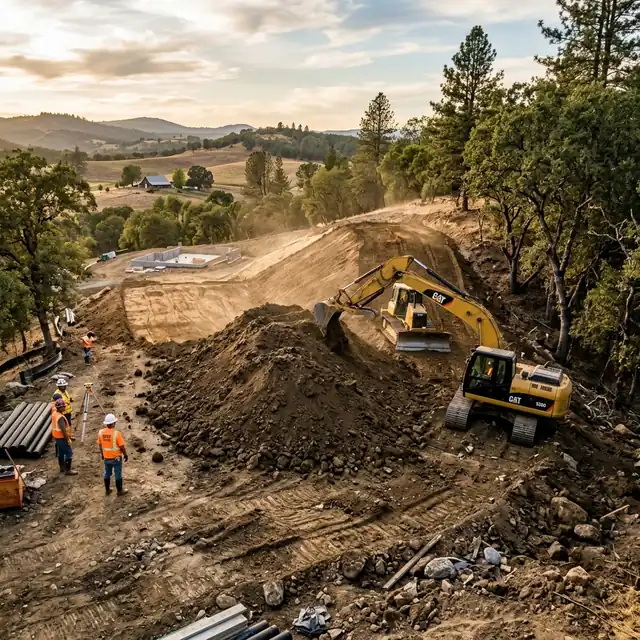
Fill Dirt for landscaping and construction

Fill Dirt Reference Guide

Fill Dirt for landscaping and construction

Fill Dirt Density & Weight Reference

Measurement SystemTotal VolumeEstimated Weight
Imperial (US)1 Cubic Yards1.25 Tons (2,500 lbs)
Metric (EU)1 m³1.63 Tonnes (1,635 kg)

* Note: Exact weight can vary based on moisture content and compaction.

Fill Dirt Costs in 2026 (Estimates)

Fill dirt, picked up (per cubic yard)$8 – $20
Fill dirt, delivered (per cubic yard)$15 – $40
Full truck load, 10 cu yd picked up$80 – $200
Full truck load, 10 cu yd delivered$150 – $400
Per ton, delivered (about 0.8 cu yd)$12 – $32

Prices are 2026 US averages. Actual costs vary by region and supplier.

Recommended Depths for Fill Dirt

Project / Use CaseRecommended Depth
Lawn Leveling1–2 inches
Grading Away from Foundation4–6 inches slope
Raised Grade or Berm Building6–12 inches
Deep Hole Filling12+ inches (compacted in layers)
Backfill After Excavation12–24 inches (in 6-inch layers)

How to Calculate Fill Dirt Volume

Most landscaping suppliers sell fill dirt by the cubic yard. To convert your project area to cubic yards, use this formula:

Volume (cu yd) = (Length × Width × Depth) ÷ 27

Our calculator also multiplies your cubic yard result by 1.25 tons/yd³ (the standard density for fill dirt) to show estimated weight — essential if you are hauling the material yourself or need delivery pricing.

Fill Dirt Calculator: Weight, Compaction & Ordering Guide

What Fill Dirt Is and Where It Is Used

Fill dirt is subsoil excavated from below the topsoil layer, usually 12 or more inches down. Because it contains almost no organic matter, it does not decompose or shift after placement, which makes it the structural material of choice for raising grade, backfilling foundations, filling old swimming pool holes, and building up low spots before paving. A cubic yard of it weighs 2,200 to 2,500 lbs dry, so it stays where you put it. What it cannot do is grow anything: plan a 4 to 6 inch topsoil cap wherever grass or plants will live.

Compaction: Why You Order 20% Extra

Loose fill dirt is full of air pockets. Once it is spread, wetted, and tamped or rolled, those pockets collapse and the volume drops by about 20%. Contractors manage this by placing fill in lifts, layers of 4 to 6 inches that are each compacted before the next one goes down, which prevents the sinking and cracking that plague single deep dumps. The practical consequence for ordering is simple: take the finished volume from the fill dirt calculator and multiply by 1.2. A 10 cubic yard hole needs about 12 yards delivered, every time.

Weight, Trucks, and 2026 Prices

At 1.25 tons per cubic yard, fill dirt is heavy enough that logistics drive the real cost. A standard dump truck carries 10 to 14 cubic yards per load, roughly 12.5 to 17.5 tons, while a half-ton pickup manages only about half a yard per trip. In 2026, expect $8 to $20 per cubic yard picked up and $15 to $40 delivered depending on distance. Ask for clean fill, confirm the load is free of debris and contaminated soil, and get the delivery fee in writing before the truck leaves the yard.

Pro Tips & Insights

1

Fill dirt is subsoil with rocks and clay, so it makes a poor growing surface. Cap any planting area with 4 to 6 inches of screened topsoil instead of seeding directly into fill.

2

Always order 20% extra fill dirt to account for compaction. A hole that measures 10 cubic yards of finished volume will swallow about 12 yards once the dirt is tamped and rolled.

3

When filling deep holes, compact the dirt every 4 to 6 inches in layers. Skipping this step causes sinking and settling within a season or two.

4

A cubic yard of fill dirt weighs 2,200 to 2,500 lbs dry, so a half-ton pickup can carry only about half a cubic yard safely. Plan on delivery for any project over 1 cubic yard.

5

Ask for clean fill dirt and confirm it is free of construction debris, roots, and contaminated soil. Clean fill compacts evenly and will not leave voids behind as buried organics break down.

Frequently Asked Questions

What is the difference between fill dirt and topsoil?▼
Fill dirt is subsoil dug from below the surface layer, typically 12 or more inches down. It contains clay, sand, and rock but almost no organic matter, so it stays stable under foundations, patios, and driveways. Topsoil is the rich top layer used for planting, and any planting area built on fill dirt needs a 4 to 6 inch topsoil cap to grow well.
How much does a yard of fill dirt weigh?▼
A cubic yard of dry fill dirt weighs about 2,200 to 2,500 lbs, roughly 1.25 tons. Wet fill dirt is far heavier, up to 3,000 lbs, or 1.5 tons, per yard after heavy rain. The fill dirt calculator above uses 1.25 tons per cubic yard for its weight estimates.
How much does fill dirt compact?▼
Fill dirt compacts by about 20% when it is properly tamped and rolled. A project that measures 10 cubic yards of finished volume needs about 12 cubic yards delivered to reach the same height. Always order 20% more than your raw geometric volume calculation.
How many yards of fill dirt are in a ton?▼
One ton of fill dirt is about 0.8 cubic yards, because a cubic yard weighs about 1.25 tons. If a supplier quotes $25 per ton delivered, that works out to roughly $31 per cubic yard. Wet loads carry extra water weight, so a ton of soaked fill dirt covers slightly less volume.
How much does fill dirt cost per yard in 2026?▼
Fill dirt costs $8 to $20 per cubic yard picked up at the supplier in 2026, and $15 to $40 per cubic yard delivered, depending on distance. A full 10 yard truck load typically runs $80 to $200 picked up, or $150 to $400 delivered. Clean, screened fill sits at the top of the range, while unscreened bank-run fill is the cheapest.
How much fill dirt do I need for a 20x20 area 6 inches deep?▼
A 20 by 20 foot area at 6 inches deep holds 200 cubic feet of fill dirt, which is 7.4 cubic yards. Adding the standard 20% compaction allowance brings the order to about 9 cubic yards. That load weighs roughly 11 tons dry, so it arrives as a single standard dump truck delivery.
Can you grow grass on fill dirt?▼
No, grass grows poorly on fill dirt because it has almost no nutrients or organic matter. Seed may sprout, but the lawn stays thin and patchy. Cap the fill with 4 to 6 inches of screened topsoil first: a 1,000 sq ft lawn at 4 inches deep needs about 12.3 cubic yards of topsoil over the fill.

Related Calculators

Related Guides