Free Cinder Blocks Calculator

Build your wall with confidence.

Standard 8"×8"×16" cinder blocks, also called CMU (Concrete Masonry Units). Enter your wall dimensions and get the exact block count, plus mortar bags needed.

Calculate Your Project

Project Diagram

L: 10 ftW: 5 ft

Blocks Needed (incl. 10% waste)

—Blocks

Enter dimensions above

Mortar Bags Needed

—Bags (80 lb)

~1 bag per 30 blocks

Blocks Needed by Wall Size

25 sq ft wall32 blocks (incl. 10% waste)
50 sq ft wall63 blocks (incl. 10% waste)
100 sq ft wall124 blocks (incl. 10% waste)
200 sq ft wall248 blocks (incl. 10% waste)
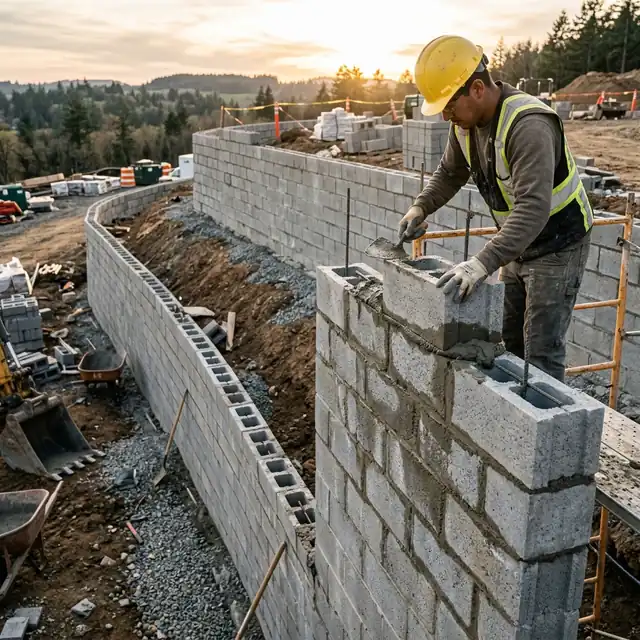
Cinder Blocks for landscaping and construction

Cinder Blocks Reference Guide

Cinder Blocks for landscaping and construction

Cinder Block Costs in 2026 (Estimates)

Standard 8x8x16 block (each, retail)$1.75 – $2.75
Full pallet (72–75 blocks)Lower per-block price than retail; varies by yard
Mortar mix, 80 lb bag$12 – $18
DeliveryRecommended for full pallets; one pallet weighs about 2,850 lbs

Prices are 2026 US averages. Actual costs vary by region and supplier.

Recommended Depths for Cinder Blocks

Project / Use CaseRecommended Depth
Garden Retaining Wall (1 block high)8 inches tall
Raised Bed Wall (2 blocks)16 inches tall
Standard 8ft Wall12 courses high
Foundation / BasementVaries — use structural engineer

How to Calculate Cinder Blocks Volume

Standard CMU blocks are 8"×8"×16". To calculate block count, divide your wall area (in sq ft) by the face area of one block (0.889 sq ft), then multiply by 1.10 for a 10% waste factor.

Each bag of mortar covers approximately 25–35 blocks. Our calculator includes the industry-standard 10% waste factor automatically.

Cinder Block Sizes, Weights & Wall Math Explained

Nominal vs Actual Dimensions

Every cinder block is sold by its nominal size, but no block actually measures that size. A standard block is called 8 × 8 × 16 inches, yet the physical unit measures 7.625 × 7.625 × 15.625 inches. The block is cast exactly 3/8 inch smaller in each dimension so that, once a standard 3/8 inch mortar joint is added on the bed and head, the installed unit fills the full nominal space. This is why block walls lay out cleanly on an 8 inch vertical and 16 inch horizontal grid, and why each block face covers 0.889 sq ft of finished wall. Ordering, layout, and estimating all use the nominal size. Only when you are fitting a block into an existing opening should you work with the actual measurement.

Weight Classes and ASTM C90

Under ASTM C90, concrete masonry units are grouped into three weight classes based on the density of the concrete. Normal-weight blocks use gravel and sand aggregate at 125 lbs per cubic foot or more, and an 8x8x16 unit weighs 35 to 40 lbs. Medium-weight blocks use pumice or slag aggregate at 105 to 125 lbs per cubic foot and weigh 28 to 33 lbs. Lightweight blocks use expanded shale or slate below 105 lbs per cubic foot and weigh 22 to 26 lbs, which speeds up laying and improves insulation. All three classes must meet the same minimum compressive strength, so the choice is about handling, insulation, and freight weight rather than strength. A pallet of 75 normal-weight blocks totals about 2,850 lbs, while the same count in lightweight can save several hundred pounds per load.

Why the Calculator Adds 10% Waste

The raw math for a wall is simple: divide the wall area by 0.889 sq ft per block. A 100 sq ft wall divides out to 113 blocks. Real walls never use exactly that number. End blocks get cut in half, courses break during handling, and corners and openings consume partial units that cannot always be reused. The calculator adds a 10% waste factor, which lifts the 100 sq ft example to 124 blocks, the standard planning figure used by masons. For straight, unbroken walls built by an experienced crew you can trim that to 5%. For walls with many openings, steps, or angles, 15% is safer. Blocks are cheap and returnable at most yards; a second trip mid-project is not.

Pro Tips & Insights

1

Standard CMU blocks are 8"×8"×16" nominal (height × width × length), but the actual block measures 7.625 × 7.625 × 15.625 inches. The missing 3/8 inch is the mortar joint, so always lay out your wall using the nominal 8 × 16 inch grid.

2

Always include a 10% waste factor for cuts and breakage. A 100 sq ft wall needs 113 blocks on paper, but you should buy 124 so one cracked block never stops the job.

3

One 80 lb bag of mortar mix lays approximately 30 to 35 standard CMU blocks. Plan on 1 bag per 30 blocks so you never run short mid-course.

4

A full pallet of 72 to 75 normal-weight blocks weighs about 2,850 lbs, which is far beyond a half-ton pickup payload. Haul no more than 35 to 40 loose blocks per trip in a half-ton truck, or pay for delivery.

5

For retaining walls over 2 feet tall, always consult a structural engineer. Wall failure can be catastrophic, and tall walls need rebar, grout-filled cores, and a footing below the frost line.

Frequently Asked Questions

What size is a standard cinder block?▼
A standard CMU (Concrete Masonry Unit) has a nominal size of 8 inches high × 8 inches wide × 16 inches long. The actual block measures 7.625 × 7.625 × 15.625 inches, because it is made 3/8 inch smaller in each dimension to leave room for the mortar joint. Once laid, the block plus its joint fills the full 8 × 8 × 16 inch nominal space.
How much does an 8x8x16 cinder block weigh?▼
A standard 8x8x16 cinder block weighs 35 to 40 lbs in normal weight, with 38 lbs as the working average. Medium-weight blocks weigh 28 to 33 lbs, and lightweight blocks weigh 22 to 26 lbs. Weight matters for hauling: 75 normal-weight blocks on a pallet add up to about 2,850 lbs.
How many cinder blocks do I need for 100 square feet?▼
One block face covers 0.889 sq ft, so a 100 sq ft wall needs 113 blocks laid. Add 10% for cuts and breakage and the buy quantity is 124 blocks. The calculator above applies that waste factor automatically.
How many cinder blocks are in a pallet?▼
A standard pallet holds 72 to 75 normal-weight 8x8x16 blocks and weighs about 2,700 to 3,000 lbs total, with 2,850 lbs typical. That is too heavy for a half-ton pickup, which can safely carry only 35 to 40 loose blocks per trip. Order delivery for full pallets, or haul them with a 3/4-ton truck or a dual-axle trailer.
How many bags of mortar do I need for cinder blocks?▼
One 80 lb bag of mortar mix lays approximately 30 to 35 standard CMU blocks, depending on joint thickness. Plan on 1 bag per 30 blocks as a safe estimate, so a 124-block wall needs about 4 to 5 bags. Type S mortar is the standard choice for load-bearing and below-grade walls.
How much grout do I need to fill cinder block cores?▼
The two hollow cores in one standard 8x8x16 block hold about 0.33 cubic feet of grout. That works out to 81 fully filled blocks per cubic yard of grout. Most structural walls only grout the cores that contain vertical rebar, so count your reinforced cells rather than every block.
What is the difference between cinder blocks and concrete blocks?▼
Cinder blocks (legacy term) historically used coal cinders as aggregate and were lighter but weaker. Modern CMU blocks use concrete aggregate made from Portland cement, sand, and crushed stone. The terms are now used interchangeably, but today's blocks are all concrete masonry units built to ASTM C90 standards.

Related Calculators

Related Guides