Fall Vegetable Plant Spacing Chart for Raised Beds & Garden Rows
Complete spacing guide for fall crops: lettuce, broccoli, kale, cabbage, and root vegetables. Master plant spacing for raised garden beds and maximum harvest yields.

Civil Engineer & Estimator
📑 Table of Contents
- ▸Cool-Season Fall Crop Master Spacing Matrix
- ▸Square Grid vs. Staggered Triangular Spacing: Which Yields More?
- ▸Raised Beds vs. Traditional In-Ground Row Spacing
- ▸Companion Planting Pairings for Fall Crops
- ▸Biological Risks of Overcrowding Fall Vegetables
- ▸How to Calculate Total Seedlings for a Standard 4’ × 8’ Raised Bed
- ▸Frequently Asked Questions
- ▸Calculate Your Garden Grid Instantly
AEO Quick Answer: For maximum yield in raised garden beds, space cool-weather fall crops as follows: Head Lettuce (6 to 8 inches apart; 4 per sq ft), Broccoli, Cabbage & Cauliflower (12 to 15 inches apart; 1 per sq ft), Kale & Swiss Chard (12 inches apart; 1 per sq ft), Spinach & Leaf Lettuce (4 to 6 inches apart; 9 per sq ft), and Carrots & Radishes (2 to 3 inches apart; 16 per sq ft). For in-ground farm rows, leave 18 to 36 inches between rows for walking and airflow.
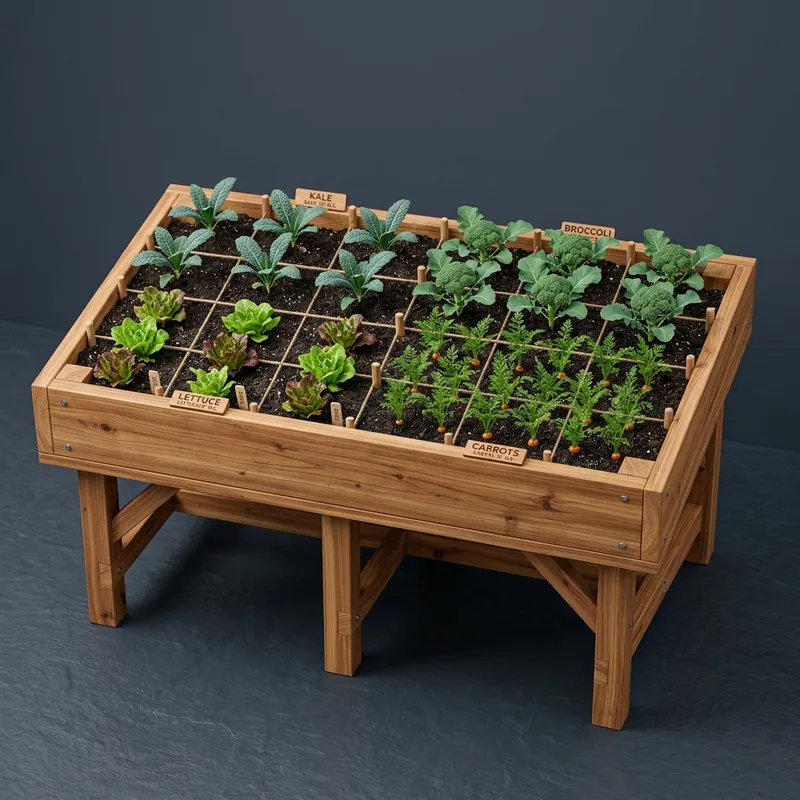
As the scorching heat of mid-summer subsides, late summer through autumn offers one of the most productive, disease-resistant growing seasons for home gardeners and market growers. Cool-season vegetables (brassicas, leafy greens, alliums, and root crops) thrive in moderate daytime temperatures (55°F–70°F) and convert starches into natural sugars after light frosts, producing superior flavor and crisp texture.
However, improper plant spacing is the primary cause of fall garden failure. Overcrowding blocks low-angle autumn sunlight, restricts air circulation, fosters devastating powdery mildew and damp-off fungi, and starves root systems of crucial soil nutrients.
This comprehensive guide details the master fall crop spacing matrix, compares Square Foot Gardening grids against staggered triangular patterns and traditional in-ground rows, provides companion planting rules, and explains how to calculate exact plant counts per bed.
Cool-Season Fall Crop Master Spacing Matrix
| Vegetable Crop | Raised Bed Grid Spacing (Square Foot Method) | Staggered Triangular Spacing (Between Plants) | In-Ground Row Spacing (Inches Between Plants) | In-Ground Row Distance (Inches Between Rows) | Minimum Soil Depth Required |
|---|---|---|---|---|---|
| Broccoli | 1 per Sq Ft (12“ grid) | 14 Inches | 18 to 24 Inches | 24 to 36 Inches | 12 Inches |
| Cabbage (Head) | 1 per Sq Ft (12“ grid) | 14 Inches | 15 to 18 Inches | 24 to 30 Inches | 12 Inches |
| Cauliflower | 1 per Sq Ft (12“ grid) | 14 Inches | 18 to 24 Inches | 24 to 30 Inches | 12 Inches |
| Kale (Lacinato / Curly) | 1 per Sq Ft (12“ grid) | 12 Inches | 12 to 18 Inches | 18 to 24 Inches | 8 to 10 Inches |
| Swiss Chard | 2 to 4 per Sq Ft (6–8“ grid) | 8 Inches | 8 to 12 Inches | 18 Inches | 8 to 10 Inches |
| Head Lettuce (Romaine/Butter) | 4 per Sq Ft (6“ grid) | 7 Inches | 8 to 10 Inches | 12 to 18 Inches | 6 to 8 Inches |
| Leaf Lettuce / Arugula | 9 per Sq Ft (4“ grid) | 4.5 Inches | 4 to 6 Inches | 10 to 12 Inches | 6 Inches |
| Spinach | 9 per Sq Ft (4“ grid) | 4.5 Inches | 4 to 6 Inches | 10 to 12 Inches | 6 to 8 Inches |
| Carrots & Parsnips | 16 per Sq Ft (3“ grid) | 3 Inches | 2 to 3 Inches | 12 to 15 Inches | 12 to 16 Inches |
| Radishes | 16 per Sq Ft (3“ grid) | 3 Inches | 2 Inches | 8 to 10 Inches | 4 to 6 Inches |
| Beets & Turnips | 9 per Sq Ft (4“ grid) | 4.5 Inches | 3 to 4 Inches | 12 to 15 Inches | 8 to 10 Inches |
| Garlic & Shallots (Fall Planted) | 9 per Sq Ft (4“ grid) | 4.5 Inches | 4 to 6 Inches | 12 Inches | 8 Inches |
| Bush Green Beans (Late Crop) | 4 to 9 per Sq Ft | 5 Inches | 4 to 6 Inches | 18 to 24 Inches | 8 to 10 Inches |
Square Grid vs. Staggered Triangular Spacing: Which Yields More?
When designing a raised bed, there are two primary geometric layout patterns:
1. Square Grid Pattern (Standard Square Foot Gardening)
Plants are arranged in perfect rows and columns (12“ × 12“, 6“ × 6“, or 4“ × 4“).
- Pros: Easy to lay out using strings or timber laths; simple to measure and plant.
- Cons: Leaves small pockets of bare, exposed soil between diagonal corners.
2. Staggered Triangular / Hexagonal Pattern
Every alternating row is offset by half the spacing distance, forming equilateral triangles between adjacent plants.
- Engineering Advantage: Increases plant density by up to 15.4% per square foot with identical root spacing distance.
- Canopy Closure: Leaves overlap uniformly to form a living green mulch that blocks sunlight from weed seeds and shades soil from moisture loss.
Hexagonal Equilateral Density Formula:
Plant Count = Bed Area (sq ft) ÷ [(Spacing in Inches × 0.0833)² × 0.866]
Raised Beds vs. Traditional In-Ground Row Spacing
Why do raised beds allow 2x to 4x higher plant density than traditional in-ground gardens?
+---------------------------------------------------------------+
| In-Ground Farm Rows:                                          |
| █ Plant █   <--- 36" Footpath (Soil Compacted by Walking) --->  |
| █ Plant █   <--- High Weeds in Aisles / Thin Topsoil Layer --->|
+---------------------------------------------------------------+
| Intensive Raised Bed:                                         |
| █ Plant █ █ Plant █ █ Plant █ █ Plant █                       |
| <--- 100% Uncompacted Root Zone / Pure 12" Topsoil-Compost --->|
+---------------------------------------------------------------+- Zero Foot Traffic Compaction: In raised beds, all weeding, harvesting, and watering are performed from outside the timber borders. The soil remains ultra-porous and aerated, allowing roots to grow deep vertically instead of spreading wide horizontally.
- Engineered Soil Blends: Raised beds are filled with premium blends of 50% screened topsoil, 30% rich compost, and 20% perlite or peat moss, supplying up to 5x higher nutrient density than native clay or sand.
Companion Planting Pairings for Fall Crops
Strategically interplanting compatible vegetables enhances soil biology, confuses insect pests, and maximizes multi-tier vertical space:
Winning Fall Companion Pairs:
- Broccoli + Head Lettuce: Plant fast-growing lettuce between young broccoli seedlings. The lettuce is harvested in 40 days just as the broccoli grows large enough to shade the ground.
- Carrots + Radishes: Mix carrot and radish seeds in the same furrows. Fast-germinating radishes (21-day harvest) break open hard crust for slow carrots (75-day harvest), naturally thinning the row.
- Cabbage + Alliums (Onions/Garlic): The strong sulfur oils of garlic and green onions repel cabbage looper moths and aphids.
- Kale + Cilantro: Cilantro flowers attract parasitic beneficial wasps that prey on brassica caterpillars.
Biological Risks of Overcrowding Fall Vegetables
Resist the urge to pack extra seedlings into limited space. Overcrowding triggers three major failure modes:
- Powdery Mildew & Botrytis: As autumn nights cool and humidity rises, damp air trapped in dense leaf clusters causes fungal outbreaks that kill entire beds within days.
- Buttoning in Brassicas: When broccoli, cauliflower, or cabbage roots encounter physical crowding stress, they produce tiny, inedible 1-inch “buttons” instead of full, heavy market heads.
- Fibrous Root Stunting: Overcrowded root vegetables (carrots, beets, radishes) intertwine and produce twisted, woody, miniature roots.
How to Calculate Total Seedlings for a Standard 4’ × 8’ Raised Bed
A standard 4 ft × 8 ft raised garden bed has 32 square feet of usable growing space. Here is an optimized high-yield fall layout:
- Section A (8 sq ft): 8 Broccoli / Cauliflower plants (1 per sq ft)
- Section B (8 sq ft): 8 Tuscan Lacinato Kale plants (1 per sq ft)
- Section C (8 sq ft): 32 Romaine & Butterhead Lettuce heads (4 per sq ft)
- Section D (4 sq ft): 36 Spinach plants (9 per sq ft)
- Section E (4 sq ft): 64 Autumn Carrots (16 per sq ft)
- Total Harvest Yield: 148 productive vegetable plants from a single 4×8 bed!
Frequently Asked Questions
When is the ideal time to start fall vegetable seeds?
Start seeds indoors in mid-July to early August (or direct seed outdoors 6 to 8 weeks before your local average first fall frost date). This allows plants to build robust root systems before daily sunlight hours decrease in late autumn.
How deep should the soil be in a fall vegetable raised bed?
A minimum depth of 8 to 12 inches is recommended for leafy greens and brassicas. If growing deep taproot vegetables like Danvers carrots or parsnips, aim for 12 to 16 inches of loose, rock-free topsoil-compost blend.
Can fall vegetables survive light winter frosts?
Yes. Brassicas (kale, collards, Brussels sprouts) and root crops (carrots, parsnips, turnips) easily tolerate temperatures down to 25°F–28°F. Freezing temperatures trigger the plant to convert starches into protective glucose sugars, making them noticeably sweeter after frost.
Calculate Your Garden Grid Instantly
Plan your seasonal garden layout with zero calculation errors. Use our free interactive Plant Spacing Calculator to select your vegetable cultivars, input your bed dimensions, and generate exact plant totals and square foot grids. Also explore our Topsoil Calculator and Compost Calculator.
Ready to Calculate Your Project?
Enter your exact project dimensions into our verified calculator to get cubic yards, tons, and bags needed.
Open Material Calculator →More in Landscaping Guides
View All Guides →How Many Bags of Topsoil for a 4x4 Raised Garden Bed? (Square Foot Guide)
Discover how many bags of topsoil, compost, and vermiculite you need for a 4x4 raised garden bed across 6", 8", 10", and 12" depths. Master Mel's Mix math.
How Many Bags of Topsoil for a 4x8 Raised Garden Bed? (Depth & Cost Chart)
Calculate exactly how many bags of topsoil you need for a 4x8 raised bed. Includes 6", 8", 10", 12", and 18" depth charts, bag yield formulas, and soil recipe blends.
How Much Does a Cubic Yard of Topsoil Weigh? (Dry vs. Wet Chart & Truck Guide)
Discover exact topsoil weight per cubic yard across dry, moist, and saturated conditions. Includes truck payload limits (F-150, Ram, Chevy), bag yields, and conversion tables.