Sonotube Concrete Calculator: Bags per Tube by Size
Get exact bag counts for 8, 10, 12, and 16 inch concrete tubes at any depth, with the cylinder formula, frost depth rules, and tube sizing by post.

Civil Engineer & Estimator
📑 Table of Contents
AEO Quick Answer: A sonotube concrete calculator uses the cylinder formula: pi times radius squared times depth. At 4 ft deep, an 8 inch tube takes about 3 bags of 80 lb mix, a 10 inch tube takes about 4 bags, a 12 inch tube takes about 6 bags, and a 16 inch tube takes about 10 bags. Add 1 extra bag per tube for spillage. For instant results on your own sizes, use our free concrete calculator.
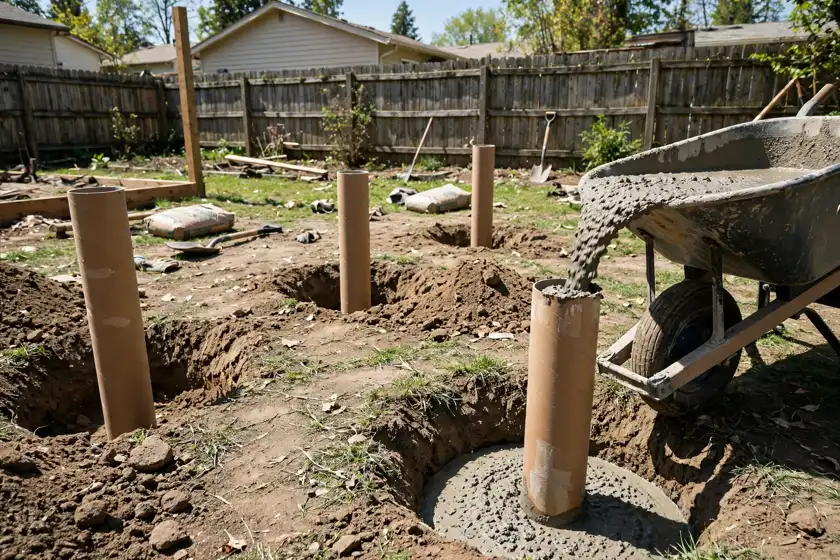
A sonotube is a round cardboard form that shapes poured concrete into a clean pier. Deck posts, fence posts, lamp posts, and pergola legs all stand on these piers. The tube is cheap and simple, but the concrete math trips people up, because a round hole holds far more than it looks like it should. A 12 inch tube 4 ft deep swallows over 3 cubic feet of concrete, and underordering by even one bag leaves a pier short of the top.
This guide gives you the cylinder formula, a bag table for the four standard tube sizes, the per-foot shortcut, depth rules tied to the frost line, and how to pick a tube diameter that matches your post.
The Cylinder Formula
Every sonotube concrete calculator runs the same math:
Volume (cubic feet) = 3.1416 x Radius (ft) x Radius (ft) x Depth (ft)
The radius is half the tube diameter, in feet. Then convert volume to bags:
- Bags of 80 lb mix = Cubic feet / 0.60
- Bags of 60 lb mix = Cubic feet / 0.45
- Bags of 40 lb mix = Cubic feet / 0.30
Worked Example: 12 Inch Tube, 4 Ft Deep
- Radius: 12 inches wide means a 6 inch radius, which is 0.5 ft.
- Volume: 3.1416 x 0.5 x 0.5 x 4 = 3.14 cubic feet.
- Bags: 3.14 / 0.60 = 5.2, so 6 bags of 80 lb mix.
- Add the spillage bag: 7 bags on hand before you start.
Bags per Tube by Size (4 Ft Deep)
| Tube Diameter | Volume at 4 Ft | 80 lb Bags (exact) | Bags to Buy |
|---|---|---|---|
| 8 inches | 1.40 cu ft | 2.3 | 3 |
| 10 inches | 2.18 cu ft | 3.6 | 4 |
| 12 inches | 3.14 cu ft | 5.2 | 6 |
| 16 inches | 5.59 cu ft | 9.3 | 10 |
Notice how fast the bags climb with diameter. Going from a 12 inch tube to a 16 inch tube nearly doubles the concrete, because volume grows with the square of the radius. Picking the right diameter matters more than any other decision on the order.
The Per-Foot Shortcut
For depths other than 4 ft, work per foot and multiply:
- 8 inch tube: 0.35 cu ft per foot of depth
- 10 inch tube: 0.55 cu ft per foot
- 12 inch tube: 0.79 cu ft per foot
- 16 inch tube: 1.40 cu ft per foot
A 10 inch tube dug 3 ft deep holds 0.55 x 3 = 1.65 cubic feet, which is about 3 bags of 80 lb mix. This shortcut is all a sonotube concrete calculator is doing behind the scenes.
Always Order One Extra Bag per Tube
Soil caves in, tubes sit slightly out of level, and the last scoop never quite fills the mixer. Budget 1 extra bag per tube beyond the table. On a six-post deck with 12 inch tubes, that is 36 bags by the table plus 6 spare, 42 in total. Unopened bags can go back to the store. A pier poured 3 inches short cannot be fixed cleanly.
How Deep Should the Tube Go?
The bottom of the pier must sit below the frost line, the deepest point your soil freezes. Frost heave can lift a shallow pier inches at a time and rack a whole deck out of level.
- Mild climates: frost line around 12 inches, piers often 24 inches deep for stability.
- Mid-latitude states: frost line 24 to 36 inches.
- Cold states: frost line 36 to 48 inches or more, and 4 ft tubes are the norm.
Your local code office publishes the exact frost depth. Every sonotube concrete calculator needs that depth as an input, because a pier dug 6 inches too shallow has the wrong volume and the wrong future. The tube should reach from below that line up to a few inches above ground level, so the post base stays dry and clear of soil. Depth is not the place to save money: digging 6 inches deeper costs minutes, while a heaved pier costs a rebuild.
Choosing a Tube Diameter by Post Size
The tube must be wide enough to carry the post base with concrete around it on all sides. When you use a sonotube concrete calculator, diameter is the first input for a reason: it is the number that gets squared in the formula.
| Post Size | Recommended Tube | Why |
|---|---|---|
| 4x4 post | 8 to 10 inch tube | Covers the post base bracket with room to spare |
| 6x6 post | 12 inch tube | The wider pier matches the bigger post and load |
| Heavy beam or gate post | 16 inch tube | Extra bearing area on soft soil |
Wider tubes also resist tipping better on tall fence posts and pergolas. If your soil is soft sand or loose fill, go one size up from the table: bearing area, not concrete strength, is what keeps the pier from sinking.
Bell-Bottom Bases Add Volume
Some piers flare out at the bottom into a bell or footing pad. The flare spreads load and locks the pier against heave, but it is extra concrete that the straight cylinder formula does not count. A plastic bell form on a 12 inch tube can add roughly 1 to 2 cubic feet, which is 2 to 3 more bags. If you use flared bases, add that volume per pier before you total the order, or use a separate footing pad and count it the same way.
Frequently Asked Questions
How many bags of concrete fill a 12 inch sonotube 4 ft deep?
A 12 inch tube 4 ft deep holds 3.14 cubic feet. At 0.60 cu ft per 80 lb bag, that is 5.2 bags, so buy 6 bags, plus 1 spare for spillage.
How deep do sonotubes need to go?
The bottom of the tube must sit below your local frost line: about 12 inches in mild climates and 36 to 48 inches or more in cold states. Most deck piers end up 3 to 4 ft deep once frost depth and a few inches of above-ground height are added.
What size tube do I need for a 4x4 or 6x6 post?
Use an 8 to 10 inch tube for a 4x4 post and a 12 inch tube for a 6x6 post. The pier needs concrete around the post base bracket on every side, and the wider tube also gives the bigger post the bearing area its load requires.
Do you remove the sonotube after the concrete sets?
No. The cardboard tube stays in the ground, where it slowly rots and flakes away without affecting the pier. If the look of the tube above ground bothers you, peel or cut away the exposed part after the concrete cures.
Calculate Your Tube Concrete Instantly
A sonotube concrete calculator is only as good as the depth you feed it, so measure the dug hole, not the plan on paper. Enter your tube diameter and depth in our free concrete calculator to get exact cubic feet, yards, and bag counts for the whole job at once. Pouring a continuous trench footing instead of round piers? Our concrete footing calculator guide covers strip footing yards, bags, and frost depth rules.
Ready to Calculate Your Project?
Enter your exact project dimensions into our verified calculator to get cubic yards, tons, and bags needed.
Open Material Calculator →More in Masonry Guides
View All Guides →Bags vs Ready-Mix Concrete: When to Order a Truck
Bags vs ready mix concrete cost comparison for slabs and footings. Break-even charts, short-load fees, and the exact yardage where a truck wins.
Block Fill Calculator: Grout Volume per 100 Blocks
Work out grout for CMU walls: 0.33 cu ft per 8 inch block, 1.22 yards per 100 blocks, 55 bags per 100, and how much you save filling rebar cells only.
Cement vs Concrete: What's the Actual Difference?
Cement vs concrete explained by an engineer: cement is the binder, concrete is the finished mix. Learn the 1-2-3 ratio, bag labels, and when the terms matter.